
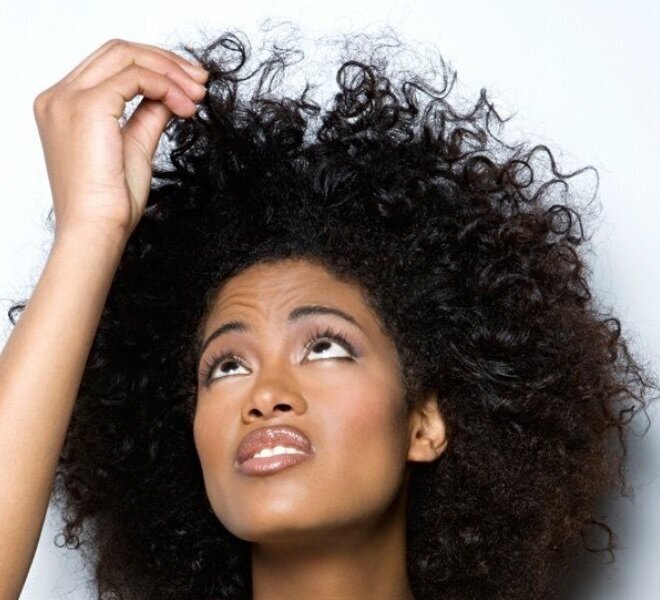
Before you splurge on expensive products or try every trend, truly understanding your hair is key. This means getting to know its specific type and texture. But how do you accurately identify these crucial details for your unique crown? It's easier than you think! Dive into this article to unlock the secrets to your hair's true nature. Let's get started!
There is often confusion between hair 'type' and 'texture'. To help clarify, know that hair type is based on the shape of the hair strand, while texture describes its thickness. There are 4 hair types: straight, wavy, curly/coily, and very coily/kinky. Regardless of your hair type, there are 3 hair textures: they can be fine, medium, or thick. One way to determine your hair's thickness is to compare it to a sewing thread. If your hair strand is finer than the thread, you likely have fine hair. If they are the same thickness, you can consider your hair medium. Finally, thick hair is generally thicker than a sewing thread.
HAIR DENSITY
Density describes the number of hair strands you have on your head. It can be sparse, medium, or dense. Knowing your hair density can help you choose your hair products and also determine which hairstyles suit you best. If you have low hair density, opt for lightweight and volumizing products. For dense hair, feel free to use creamier and thicker products to better manage volume.
THE ANDRÉ WALKER CLASSIFICATION
These recurring questions about better understanding one's hair led the famous American celebrity hairstylist, André Walker, to write a book. In this work, he established a typology to help identify your hair type. Thus, you can be 1, 2, 3, 4, 1b, 2a, 3b, 4c, etc. According to André Walker's analysis, hair is therefore divided into four types: 1 = straight hair, 2 = wavy hair, 3 = curly and coily hair, and 4 = kinky hair. Sub-types (from a to c) determine the hair's thickness, from finest to thickest.
GOOD TO KNOW
- Remember to be particularly gentle if you have fine hair. It is the most fragile texture and the most sensitive to rough handling or the use of heating tools.
- On the same head, several hair thicknesses can coexist.
- Although appearing thick, type 4 hair is actually very fine with many strands packed tightly together.
- Type 4 hair is more fragile because it has fewer cuticle layers, which provides less protection against external aggressions.
- Also note that André Walker's chart is merely a guide. Indeed, it would be overly simplistic to confine kinky hair to a single category. There are as many types of kinky hair as there are men and women who wear it.